30 November 2006

Oh! De l'Eau!

I have always been finicky about my drinking water. I began filtering it years ago and quickly discovered the difference. It tastes better, smoother somehow. It only stands to reason that quality water is best for cooking.

Each December, I vow to drink more water in the new year. It’s easier to keep that resolution now that I’ve given up soda and high-carbohydrate fruit juices.

I dress my water up with mint or lemon balm in summer. All year long, I use citrus fruits to flavor my drinks.

Lemon is a must for water goblets when you want to set an elegant table. I read somewhere that it helps mitigate the effect of carbohydrates on blood glucose levels, if consumed during a meal. I am not certain if that’s true — I tend to question anything that simple and convenient — but it is true that a wedge of lemon gives a touch of panache to a simple glass of water.

Of course, you can purchase flavored water everywhere these days. But it’s so much better when fresh, and flavored with fresh juice instead of extracts and chemicals. Once you begin to drink your water this way, the bottled stuff tastes flat and stale.

Like many travelers, my husband and I carry water bottles everywhere. We always travel with string bags, too; in Paris, my husband kept his water bottle and a piece of fruit in his bag, looped around his belt. It sustained us, even when we got lost in the jumble of streets just east of the Pantheon on an unseasonably warm May Day weekend.

We stopped to refill our bottles at the famous Wallace Fountains that are scattered around Paris. I’ll send two packets of Door County Coffee (brew it with high-quality water) to the first Francophile foodie, blogger or anyone else who can identify the location of the fountain in the photo (street name, please!). This woman jumped out of a cab to fill two large bottles and we snapped away.

29 November 2006

Split Pea Soup for a Cold Day

My chef father wasn't the only male in the family who prepared food for a living. Narcisse Laurin, one of my maternal great-grandfathers, also cooked for crowds.

Pepére left Joliet in the Province of Quebec in the late 19th century during Upper Michigan'’s lumber boom. His first job was as a lumber camp cook, preparing meals for hundreds of rough-hewn loggers. Perhaps my appetite for hearty stews, soups and baked beans comes from him. (Or, maybe it is a byproduct of life on the tundra.)

Doesn't matter. When the weather grows cold, I want something that warms the innards. Split pea soup is a French Canadian staple, and I am certain Pepére knew how to make it.

Easy Split Pea Soup

10 cups water
24 ounces dried split peas
1 medium onion, finely chopped
2 large carrots, finely chopped
1 ham bone, with some meat still on it
3 bay leaves
1 tablespoon peppercorns
1 teaspoon allspice
1 clove garlic, minced
2 cups chopped ham
1/3 cup skim milk
salt and black pepper, to taste

Wash the peas and drain. Place all soup ingredients except the (chopped ham, milk, salt and pepper) in a medium stock pot; bring to a slight boil and reduce heat. Simmer 3-4 hours on very low heat until the peas have completely disintegrated and the soup is smooth; you may want to scoop out some of the peas and place them in a blender for extra smoothness. Remove the bay leaves. Add the milk and season. Allow the flavors to marry overnight before serving.

My mother served pea soup for lunch on cold winter days, probably with a sandwich. Bolonga, maybe? I associate it with Lent, for some reason. We used to walk back to school atop three-foot high snow banks.

In our high school hot lunch program, pea soup was always served with peanut-butter sandwiches.

Today, I like my pea soup with some sort of salad with a hint of sweetness, or cole slaw made with apples and walnuts, and a hunk of nutty, whole-grain bread.

Cafe Society and MacBook Pro

We did it. Having just come off of three weeks without a workable iMac in the house (the first time that has ever happened), we bought a MacBook Pro. With the iMac back in business, that gives us two computers, finally. No battling over who gets on for how long.

We've been talking about a laptop for years, but my frugality won out. Until the desktop Mac went down.

If all goes well, I'll be able to write and blog from Paris in May. (I'll give my final exam one day and board a plane the next.) Eating in cafes, shopping at the markets (we'll be near Rue Cler) and cooking in a diminutive Paris kitchen: I can document all this and send it out right away, thus eliminating the search for a cyber cafe and satisfying friends who want to know details immediately, not when we get back. Not to mention filling up the digital memory.

There are a few other possibilities for summer trips, so the MacBook will come in handy. I like it already, although I have never been a fan of laptop keyboards. Too puny.

(The photo above is Le Petite Pont Café — a few doors from Shakespeare & Co. — where I had a wonderful herby omelet and my husband enjoyed Beef Burgundy on a sunny April Saturday.)

26 November 2006

A Perfect Pear Dessert

Since mid-October when it became evident I had purchased too many apples during the waning days of the local farm market, we have been feasting on baked apples laced with brown sugar and cinnamon and stuffed with raisins and walnuts.

It was time to upgrade to a pear.

As much as I love apples, pears have a certain je ne sais quois that apples lack — a subtle sophistication in both form and taste.

We loved this recipe:

Brandy Baked Pears

6 firm pears
1/4 cup light brown sugar
2 tablespoons unsalted butter
1/2 cup water
1/2 cup pear brandy

Pre-heat oven to 450 degrees. Peel and halve the pears. Use a melon-baller or apple corer to remove the core. Pour brown sugar into bowl or flat baking pan; coat pears with sugar.

Melt butter in shallow baking dish in microwave or oven. Add the pears, spooning some of the butter on top. Add water to the baking dish, and bake until pears become tender and sugar and butter begins to carmelize. Remove from oven, add brandy to pear dish and allow to sit for 2-5 minutes. Keep spooning juices over the pears.

For topping, I mixed mascarpone cheese with brandy and some of the juices. You can also mix 1/4 cup chilled heavy cream that has been whipped until soft peaks form with one teaspoon of brandy.

We added roasted walnuts and a shake of cinnamon to the pears before serving.

25 November 2006

Tourtiere for a French Canadian Christmas

When I started writing a weekly food feature three years ago this week, my first topic was tourtiére, the French Canadian meat pie that is an integral part of Christmas Eve. I wanted to personalize the assignment with a nod to my culinary heritage.

I don’t recall a single Christmas Eve without meat pie. My grandmother made it, then my aunts. My dear friend Sylvie, who is from Québec, makes it, too, and she was the cook I featured in my first food story.

Traditionally, tourtiére is served following midnight or Christmas Eve Mass. My great-grandmother, Memere, washed it down with Champagne. Grandma Annie liked it with Mogen David (preceeded by her Seven-Up and brandy “highball”). I like a nice Cabernet or a Shiraz with hints of berries and spices.

There are many different versions of tourtiére. Sylvie uses mushrooms in hers; other cooks use potatoes. It really doesn’t matter, as long as the meat dominates.

Our family tradition is just fresh-fround pork, onions and seasoning. I have two recipe cards, one in my mother's tidy backhand and the other in Jane's slap-dash printing. They just called it "French Meat Pie."

Tourtiére a la Plourde-Laurin Famille

Three pounds ground meat: I like a combination of fresh ground pork and ground chuck
One large onion, minced
Dash nutmeg
Dash allspice
Dash freshly-ground pepper
Dash sea salt
1-2 eggs

Prepare your crust. Again, I used the Jan. 18, 2006, pate brisée recipe from Lucy's Kitchen Notebook, which is right up there with my father's famous crust.

Preheat oven to 350 degrees. Brown the meat and onion in a large skillet. Season with pepper and spices. Set aside; you can make this ahead and keep it refrigerated.

Pat your bottom crust into a greased pie plate. Before adding the meat, blend in an egg or two, depending upon the size of your pie. I also add the salt at the last minute. The eggs keep the pie from crumbling.

Bake for about 45 minutes, until the top is lightly browned. I used an egg wash on the crust.

(This time I made the crust with duck fat, as Lucy recommends. It was a big hit with my husband — perfect, he said.)

You may serve tourtiére warm or cold. It pairs well with a vegetable side dish, like green beans, carrots or Brussel sprouts and a salad that has a dash of sweetness, such as a pear-blue cheese salad, or perhaps one with apples or cranberries.

22 November 2006

Simple Gifts

Grandma Annie always made appetizers the night before Thanksgiving.

They were for the next day, of course, and were often a recipe she had run across on the back of a package or in a magazine. I recall a ball of liverwurst coated with cream cheese and onions and rolled in chopped walnuts. It was delicious but full of fat. But we were kids then and it didn’t matter.

Annie and my father died within two years of one another and with them — for a time — went the family’s passion for food.

At the same time, my mother and her sisters slipped out of middle age and entered the years of widowhood and early retirement. They gravitated to the family home on Christmas Eve and we kids, home from college, gathered with them after Mass.

We no longer sat in the living room, but settled round the kitchen table for drinks and finger food. It was simple fare in those days: Cheese and crackers and chips and dip and highballs — Grandma’s favorite mix of Seven-Up and Brandy — and of course, meat pie or tourtiere, the French Canadian specialty.

Christmas carols played from a tinny radio. It was a very humble Christmas Eve. Still, the music brought warmth and the feel of another presence — Annie’s perhaps. And the kitchen was unmistakably her domain.

I do believe she was with us then, a quiet spirit, watching.

After a few years, we kids married and brought others into the circle and the holidays became livelier. So did the food. Once vivacious Aunt Jane was widowed and moved back to her girlhood home, spicy shrimp dips and gooey cookies and candies were added to the after-Mass menu. Friends came and went and champagne flowed.

The house was alive again.

Sadly, after 120 years in the family, the old house in Frenchtown was sold a few years back. Only my mother and one aunt survive, and my husband’s parents are gone, too. New people have joined the family circles, people with new traditions. Now every holiday is different.

New customs are born.

On the nights before Thanksgiving and Christmas, my husband and I have our own custom of a few years' duration: A cold buffet of Mediterranean foods, like grilled eggplant, tomatoes, artichoke dip, olives, pasta salad, store-bought crackers and a simple wine. We watch a favorite DVD or listen to music and fall asleep early.

It is these simple times for which I am most profoundly thankful.

20 November 2006

Salad with Cranberries, Goat Cheese, Toasted Walnuts and Maple-Fig Dressing

I needed a salad. I did not think the standard tossed salad would do.

Driven by a bottle of Maple Grove Farms Maple-Fig Dressing, this is what I came up with: A mix of bitter, sweet and earthy flavors.

Salad with Cranberries, Goat Cheese, Toasted Walnuts and Maple-Fig Dressing

3 cups green leaf lettuce, washed and torn
1/2 cup walnuts, sautéed in butter, brown sugar and cinnamon
1/3 cup dried cranberries
3 tablespoons goat cheese with herbs
3-4 thin slices sweet yellow onion
maple-fig dressing

First sauté the walnuts in about 1/2 tablespoon unsalted butter, tablespoon brown sugar and a dash of cinnamon. Toast under low heat — 200 degrees — in a toaster oven for about 20 minutes. Dry on paper towels.

While the walnuts are roasting, use the same pan to lightly brown thin slices of onion. Drain onions on paper towel.

Toss onions and walnuts with lettuce. Add cranberries and goat cheese. Splash with dressing — a little goes a long way.

It happened that the goat cheese I had on hand was flavored with basil and garlic so I had my doubts. But it worked. IN fact, I think it would be bland without the extra boost of flavor.

The recipe above made salads for three people.

Sorry to do two salad posts in three days, but I'm eating lightly (yeah, right) in preparation for Thursday.

19 November 2006

Warm Chocolate Bread Pudding with Cognac and Cointreau

Funny how traditions start: For me, this is a chocolate time of year. It began one Thanksgiving when I was stuck in Madison, with a weekend job and an anthropology paper due Monday.

The paper was a critique of Laurence Wylie's "A Village in the Vaucluse," a look at rural Provence around 1950. But on Thanksgiving Day, after consuming a chicken dinner for one (I had no invitations that year, but that suited me fine), I spent the long afternoon reading Colette's "Claudine."

And at dusk, I ate a hastily-thrown together chocolate soufflé. Somehow, Colette makes me crave chocolate. So does November, when darkness comes early bringing with it a chill and on windy nights, the sound of dead leaves scuttling across the pavement.

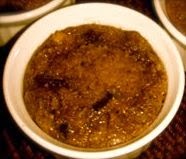
So tonight, with my mom coming for supper, we had chocolate bread pudding for dessert. It has a layered taste, not unlike wine. Fresh out of the oven, the pudding offered an aftertaste of ripe olives, my husband thought. Warmed over, it tasted very decadent.

Chocolate Bread Pudding with Cognac and Cointreau

4 cups stale French or Italian bread
4 large eggs
one cup sugar (I used fructose)
1/2-cup brown sugar
1 cup half-and-half
1/2 tablespoon vanilla extract
1/4 cup baking cocoa
pinch salt
1/2 cup cognac
1/4 cup cointreau
1 - 1 2/2 cups quality semi-sweet chocolate pieces

If the bread is very dry, soak it in two percent milk. I did not have enough bread, but I have about 7 small homemade chocolate drop cookies that had lost their freshness and I added those to the bread mix.

While bread is soaking, combine all other ingredients in a large bowl. (I was a bit heavy handed with the cognac.) Add the bread to the bowl and allow the entire mix to stand for a while, even overnight in the refrigerator, if you like.

Pour into greased casserole or large soufflé dish. I used two medium-sized ramekins and four small ones. Bake in a preheated, 325 oven until puddings are slightly firm —— about 30 minutes (but check frequently).

Serve with a dollop of whipped cream and top candied orange peel. I served mine plain, and they were fine.

When I lived in Green Bay a decade or so ago, my friends and I used to go to a wonderful downtown restaurant called "La Bonne Femme," where the dessert menu included a deep chocolate cream dish. On November days, that was always what I wanted.

18 November 2006

Saturday Night Chicken Salad

If you like kitchens, puttering about — even if you are organizing, not cooking — can be immensely satisfying.

In recent weeks, I’ve cleaned out cabinets and rearranged drawers. There’s a lot more to do and that’s what I was happily doing (to the scent of a candle and the sounds of smooth jazz) until I realized it was time to think about supper.

Saturday nights chez nous are generally pretty casual: Hamburgers, pizza, soup, etc. are the rule, not the exception.

Tonight I was governed by what needed to be consumed before it got too old to eat and what could be cleared from the freezer to make way for the turkey my husband’s company gives employees every year.

Two chicken breasts, odd bits of cheese, nearly empty jar of black olives and sun-dried tomato spread and fresh leaf lettuce and Roma tomatoes = Italian Chicken Salad.

Cut the chicken (I always trim the fat away, of course) into bite size chunks and marinate in Italian or sun-dried or roasted pepper dressing. Add about a tablespoon of sun-dried tomatoes or tomato spread to the marinade. Cover and set the marinade dish in the refrigerator for about two hours.

Saute the chicken in olive oil with Mediterranean herbs under medium to low heat. Take your time. Cook it slowly so it will be tender.

While the chicken is cooking, tear up your lettuce, slice your tomatoes, halve or slice your olives. Cut or crumble your cheese: I used feta and mozzarella.

I found a jar of pine nuts that tasted a bit stale. To remedy this, I roasted them with a dash of olive oil and Tuscan herbs in a 200-degree toaster oven.

Once the nuts are roasted and the chicken is cooked, assemble your salad and drizzle with oil-and-vinegar dressing. Serve with hard, chewy dinner rolls.

The salad is quite spicy so I paired it with a dry and fruity chardonnay.

I've long had this theory that a simple table is an elegant table. So I rarely serve too many things at once. This is about right for an evening meal, in my opinion.

17 November 2006

The Art of Living: Cider and Santas on a Cold Afternoon

Enjoying life (and food and wine) is inextricably linked to so many other sensual experiences.

I’m not talking about sex here.

Sight and smell and sound are all part of the experience. Why else do we fuss so over dishes, table linens, centerpieces, candles and dinner music?

I don’t imagine many of you will disagree.

So that’s why I wanted to share this afternoon with you. In addition to my weekly food column, I write a feature about working people. On Thanksgiving weekend, I usually feature someone associated with the holidays.

This year, I revisited an artist who makes wonderful, whimsical papiér maché figures. She is best known locally for her Santas.

Her farm is about 15 miles out of town to the north, where pine forest closes in on farm field. She and her husband live in an old log cabin that was long ago combined with a farm house to create a home that is full of odd-shaped rooms and nooks and crannies and comfortable old furniture covered in fabrics you can no longer find. Comfort is the key word here, old comfort, nothing too new and overstuffed.

An old granary serves as her studio. It is filled with dancing frogs and flying pigs and trees with faces and just about any creature that can be molded of papiér maché wrapped around a dried gourd or piece of driftwood. In her world, pumpkins dance and turtles ride piggyback atop one another.

Her Santas I leave for you to judge. But aren’t they exquisite?

I had looked forward to this visit all week. I was not disappointed. We sat around a space heater in her studio, and sipped mulled cider and nibbled on apple kringle to a background of soft Celtic music. We talked art, not food. (But that didn’t matter. It was an enchanting afternoon and whetted my appetite for more — more time to enjoy the worlds of art and nature. What better place to do that than in my own kitchen?)

Outside the studio, the air was fragrant with wood smoke. Chickens cackled and lambs bleated. Crows flew overhead and I could hear a downy woodpecker somewhere. Leaves crunched underfoot. The wine-dark smell of old leaves is gone now, but it has left behind a scent of winter on the rise.

If all goes well tomorrow, I’ll spend the afternoon in my own kitchen, with a scented candle burning and jazz tunes playing. Outside, the air will smell of wood smoke, too, for my neighbor Jerry likes a good fire on cold days. Crows will caw overhead and I may see a few late-season Canada geese flying south. I can't recreate the feel of this afternoon, but it's Saturday — my day — and nothing is going to stop me from enjoying life.

15 November 2006

The Chef Doctor is In

It was a three-meeting day for my husband and the day after two multi-meeting days for me.

So, of course, it called for a quick but soothing meal.

Once again, bottled spaghetti sauce came to our rescue. This time we turned to Classico’s Sun-Dried Tomato Alfredo, a creamy and tangy sauce that provides the flavor and comfort we need after a long day in our respective cubicles.

I browned a half-pound each of mild Italian sausage and ground chuck, draining the meat. I used the drippings still in the pan to brown a half-cup each of red, green and yellow peppers cut into chunks. These I drained on a paper towl.

The meat and peppers went into a simmering pan of sauce.
Meanwhile, I used my new stockpot to cook two big handfuls of sun-dried tomato and basil fettucine. Into the toaster oven went two thickish slices of Italian boule bread from LaBrea Bakery, which had been buttered and lightly spread with The Silver Palate’s sun-dried tomato paste and Polaner pre-chopped garlic.

In five minutes it was all set to go.

“This is really good,” my husband said.

It was. We paired it with shiraz from the bottle of Yellow Tail we opened two nights ago, which seemed to retain its quality.

I could taste vanilla in the wine, something I have not tasted before when we have teamed it with pizza or sausage rustica.

Not bad for a doctored-up meal.

To make this meal, you will need:

• One jar Classico Sun-Dried Tomato Alfredo
• A half pound each Italian sausage and ground beef or ground chuck
• At least one pepper, any color
• Sun-dried tomato spaghetti or fettucine
• French or Italian bread
• Sun-dried tomato spread
• Minced or chopped garlic
• Olive oil (for browning) and butter

Of course, I'd prefer to make all this from scratch. Really. Even the bread. But I think you can still have a mighty good meal if you choose the best ingredients you can find, even if some are ready made.

13 November 2006

Vin Ordinaire? Mais, Non!

After a long day of meetings and deadlines, my husband and I are often too tired for anything more than store-bought pizza. This we nearly always "doctor up" with green peppers, black olives, mushrooms, eggplant, artichokes, goat cheese or whatever is on hand and interesting.

The wine needs no doctoring up, however. More often than not, our choice is a value wine. I'd like to be able to go down into a cave and choose something a bit more posh, but (A) If it's terribly fancy, it's probably not available locally, and (B) I'd rather spend my money on travel.

That's not to say that we do not occasionally spend a bit more on a bottle of wine, but for occasions that are not special, we opt for a good buy with flavor that does not let us down. (We have yet to try the Two-Buck Chuck that was so talked about a few years back.)

Among our favorites are Fat Bastard, Yellow Tail, La Veille Ferme, Red Bicyclette, 14 Hands, Bogle, Mondavi, and Ménage å Trois from the Folie å Deux vineyard in the Napa Valley.

Generally, we stick with cabernet, shiraz and burgundy over the winter months. (A Wisconsin wine I can most heartily recommend is Wollersheim Winery's Prairie Fumé, but since it's got a green-apple taste, I prefer it in summer.)

My husband and I are not terribly sophisticated wine drinkers. We simply know what suits our taste and our pocketbook.

What are your favorite wines? Don't stick to value wines!

12 November 2006

Stephane's Truffle Salad — Sans Truffles

When my little city had a French restaurant with a Bordeaux-born-and-bred chef, my husband and I enjoyed a truffle, green bean and carrot salad, usually before a meal of duck and roasted vegetables.

Chef Stéphane, whose father was also a chef, is long gone on to fix his wonderful meals in other restaurants. So I had to re-invent this healthy-tasting salad.

Alas, it calls for truffles, something I cannot pick up at the local supermarket. But over the weekend, I found white truffle oil in Green Bay. I thought it was worth a try.

Stéphane's Salad Chez Moi

Two cups leaf letture or spinach, washed and torn
1 cup slender green beans, blanched
1 cup carrots, sliced in strips and blanched
1/2 cup roasted and sugared walnuts
1 Tablespoon goat's cheese
Pinch of sea salt

Arrange all the ingredients on a plate and cover with a dressing made from one tablespoon each truffle-infused olive oil and wine wine vinegar. Finish with a pinch of sea salt. Makes two salads.

Tonight I used red onion slices, which were a bit too strong. Next time, I will try green onions. We thought the salad called for a touch of sweetness — raisins, perhaps.

We thought the lettuce, beans and carrots made a nice bland base for a variety of accents, a mix of tart and sweet.

It is, of course, very difficult to find an acceptable substitute for truffles.

P.S. In the excitement of being back online and in my haste to get this online, I guess I forgot to mention the flavor of the white truffle oil: A bit too subtle for a truffle lover. I may have to play around with vinegars to get the right dressing.

But really, the fun is in experimenting, in trying to get it right, or at least close.

11 November 2006

Back in the Kitchen

Mac is back.

After three weeks without a home computer, we retrieved our three-year-old iMac today. Since it was under extended warranty, we had to drive it to the closest Macintosh repair center an hour away. That means taking an afternoon off, which is difficult to do, or driving there on Saturday, much easier. We made a day of it, stopping for lunch and visiting a wine shop where the selection was much better and the prices were more affordable than in our little town.

We also stopped at a kitchen store where I bought a new stockpot and some pie weights.

So, we're all set! It may take a day or two to get back in business, but I want to thank everyone for the encouragement in the last few weeks. I missed you all. Since I generally do my lurking, surfing and blogging before work or late at night, I was unable to keep up. I found that my iMac at work would not load photographs — very frustrating. I also found it difficult to read other blogs, both in terms of time and my work Mac's inability to download photos.

Anyway, 'old Mac is back! Thanks to all my blogger friends for their support and understanding. How I've missed you!

Mimi

P.S. The photo above is not my kitchen but the French kitchen we used on our last trip to France. My kitchen is due for a good tidying up, which it will get tomorrow!

03 November 2006

Still Without Mac

A little update: The problem was allegedly a faulty logic board which is on order.

Meanwhile, I am cooking away, but without the iMac watching me from the breakfast room, forgetting to take photos...

Hope to see you soon!

Mimi