The summer after Grandma Annie died, I assigned myself the bittersweet task of sifting through her recipes.
They were mostly in the old back kitchen, filling a deep cheese box and several other vessels (including the casserole dish pictured above) to the brim. The recipes were clipped from the backs of rice boxes and soup cans, from the pages of McCall's and Woman's Day and Family Circle magazines. They were written on scraps of paper in Annie's scrawl and they were torn from the pages of spiral notebooks.
Annie's prodigious taste for sweets was evident, for many of the recipes were for layer cakes and cookies or bars and coffee cakes. I smiled when I saw certain types of recipes over and over again.
Lemon cakes, orange cakes, sugar cookies and apple strudel; date bars, brownies, cutout cookies and cinnamon rolls — these were the things Annie loved. She made them regularly, not just for special occasions like birthdays and funerals and the days she worked at the polls at the neighborhood schoolhouse a block away.
Also among the recipes were casseroles and soups and stews and sandwiches. There were fancy finger foods and chip dips and even her recipes for "beer junk," better known today as Chex mix. Jello salads, too, and yeast breads — recipes by the hundreds, many dating back to the 1930s.
Some were written in French, others in English. Many I am sure she never made. But they appealed to her, perhaps to her notion of a proper Sunday dinner or a tea for the ladies or a child's birthday party.
There were recipe books, too, the kind that grocery stores sometimes give away or the ones you could send away for, as long as you provided a box top or two. Annie had tons of those, and all over her house were little scraps of addresses she'd get from some TV program advertising a cookbook.
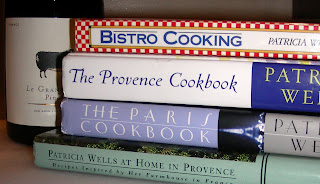
Annie could never resist a new recipe or cookbook. Fanny Farmer was one of her bibles. You can tell a lot about a person from their cookbooks. Look for the heavily-stained and dog-eared pages and you will know their tastes. Look for margin notes and recipes scribbled on back pages. Recipes are an important part of cultural and family history.
Recipes hold promise for us. When we see a something appealing in a magazine or on the back of a box of noodles or on someone else's blog, we see a dream, too — a sense of how meals ought to be served, how snacks ought to be eaten.
We see ourselves in a different way. Maybe we see ourselves as we wish we could be. Those of us who are hamburger may wish to be Chateaubriand. Or vice versa.
We imagine preparing a certain dish at a certain time. Perhaps we imagine apricot-stuffed French toast on a sunny Saturday or chocolate-mocha brownies on a blustery afternoon. When I think of sun slanting through a kitchen window in the late afternoon, I often think of butterscotch bars. Whether this is some sort of culinary memory that sticks to my brain or the result of a Joni Mitchell song, I cannot say.
When I stuffed a package of rice from the Camargue into my suitcase as we left France two years ago, I saw myself preparing it on a sunny day, a day that reminded me how the feel and look of France changes as the SNCF train whizzes southward.
A few days ago, when I started thinking about taste pairings, my imagination was fired up. I saw myself making certain dishes at certain times and I created a set of expectations for the mouth feel of new taste pairings.
Last night, I made another recipe from
McCormick Spices' flavor forecast, this time pairing mustard seed with fennel.
Braised Chicken with Mustard Seed and Fennel1 tablespoon yellow mustard seeds
1 tablespoon fennel seed
eight chicken thighs (I used breasts)
1 teaspoon sea salt
1/2 teaspoon black peppercorns, crushed
1 tablespoons olive oil
1 cup coarsely chopped onion
1 14.5-ounce can diced tomatoes, undrained
1/2 cup dry white wine
1 tablespoon parsley flakes
Toast the mustard and fennel seeds in a skillet for about two minutes. The fragrance will be exquisite. Remove them from the pan after about two minutes or crush with a mortar and pestle.
Season the chicken with salt and pepper and brown in in olive oil until golden an all sides. Remove it from the pan. Brown the chopped onion in the pan, then add the tomatoes, wine, parsley and crushed seeds. Return the chicken to the pan and bring the mixture to a boil. Cover the pan and cook over low heat for 14 minutes, stirring frequently. Uncover and simmer for another 15 minutes.
I served this with garlicky, oven-roasted potato wedges and olives. We liked it, but preferred Wednesday night's pistachio-ginger chicken. The tomatoes seemed to overwhelm the fennel and mustard seed. Perhaps next time — a bit more seed and a bit less tomato. I didn't have enough chicken so I cut the recipe in half — perhaps my "eyeballing" of some of the ingredients was not a good idea.
Like old recipes and cookbooks?
To read more about old cookbooks, see Terri's extensive and fascinating post at
Island Writer. She's a writer so books hold more than words and stories for her.